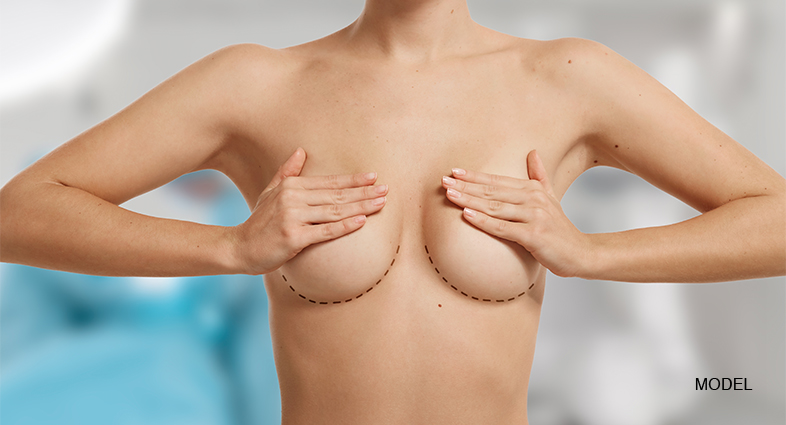


Living with tubular (or tuberous) breast deformities can significantly impact your body image and self-esteem. Characterized by a narrow base, high crease, or enlarged areolas, this condition is a structural development issue—not just a matter of size.
Fortunately, specialized reconstructive breast surgery can release constrictions, restore volume, and create a soft, rounded, and natural breast shape.
What is Tubular Breast Deformities?
Tubular breast deformities is a developmental variation in which the breast does not develop the typical rounded shape and lower-pole fullness. The condition can involve constricted breast tissue, a narrow breast base, a high inframammary fold, and changes in the size or shape of the areola.
Common Characteristics
- Elongated or Tube-Like Shape: Breasts project outward rather than forming a round base.
- Narrow Base & Reduced Lower-Pole Fullness: The breast base may be constricted, with limited development of the lower portion of the breast.
- High Inframammary Fold (Crease):
- The breast crease may sit higher on the chest wall than the typical position.
- Enlarged Areolas & Areolar Herniation: Breast tissue may herniate through the areola, creating a puffy or enlarged appearance.
- Asymmetry & Drooping (Ptosis): Breasts may appear uneven or point downward.
Surgical Techniques: How Tubular Breasts Are Corrected
Correcting a tubular deformity requires more than standard implant placement. It involves specialized surgical techniques to release the constricted tissue and reshape the breast envelope:
- Internal Tissue Release: Releasing restrictive tissue allows the natural breast tissue to unfold and expand, helping reduce the risk of a “double-bubble” contour.
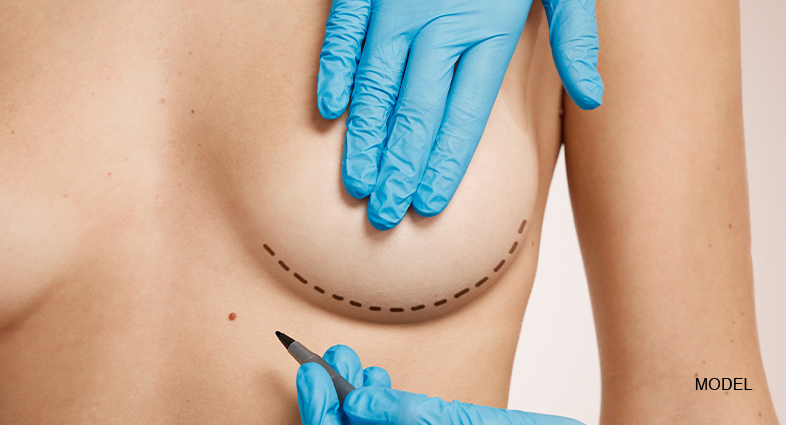
- Lowering & Widening the Crease: Moving the breast fold down and out creates a larger pocket for balanced fullness.
- Breast Implants & Volume Restoration: Implants or other volume-enhancing techniques can restore projection and fullness, depending on the patient’s anatomy and the severity of the deformity.
- Breast Lift (Mastopexy) & Areolar Reduction: Reshapes the skin envelope, lifts sagging tissue, and resizes large or puffy areolas for a proportional finish.
What to Expect: Results & Recovery
- Mild Deformities: Some patients may achieve their desired improvement with a single procedure.
- Severe Deformities: Significant deformities may require multiple procedures, such as using a tissue expander before placement of the final implant, depending on the patient’s anatomy and surgical plan.
- Settling Period: If the crease is lowered, a temporary double-crease appearance can occur during early healing. It can take several months for the breast tissue to settle, soften, and smooth out.
Ready to take the next step toward renewed confidence? Schedule a personalized consultation to discuss your custom surgical plan.
Frequently Asked Questions
1. What causes tubular breasts?
Tubular breast deformity is a developmental breast condition that is generally considered to have a congenital or embryological origin. One leading theory involves a constricting ring of fibrous tissue that restricts normal breast development.
2. Can tubular breasts be corrected with implants alone?
Implants alone may not adequately correct all aspects of a tubular breast deformity. Depending on the severity of the deformity, implant placement alone may not address the underlying constriction and can result in an incomplete correction of the breast shape.
3. Will insurance cover tubular breast surgery?
Because tubular breast correction involves reconstructive techniques to fix a developmental deformity, some insurance providers may cover portions of the procedure. Coverage varies widely by provider and plan, so a full consultation and submission of medical documentation are usually required.
4. How long is the recovery time after tubular breast surgery?
Most patients return to light daily activities within 1 to 2 weeks, depending on the extent of the procedure. Strenuous exercise, heavy lifting, and chest workouts should be avoided for 4 to 6 weeks. Complete settling and final tissue softening can take several months.
5. Can I breastfeed after tubular breast correction?
The ability to breastfeed depends on the amount of natural glandular tissue present and the specific surgical techniques used. While procedures involving areolar resizing or extensive tissue repositioning can affect milk ducts, The surgeon may use techniques intended to preserve as much functional tissue as possible, when appropriate, but breastfeeding ability cannot be guaranteed.
Request Your Consultation
If you have or are affected by tubular breast deformity, a personalized consultation can help determine whether surgery may be appropriate and which techniques may be considered based on your anatomy and goals.
You can schedule an appointment online, or you can call 858-638-9800.