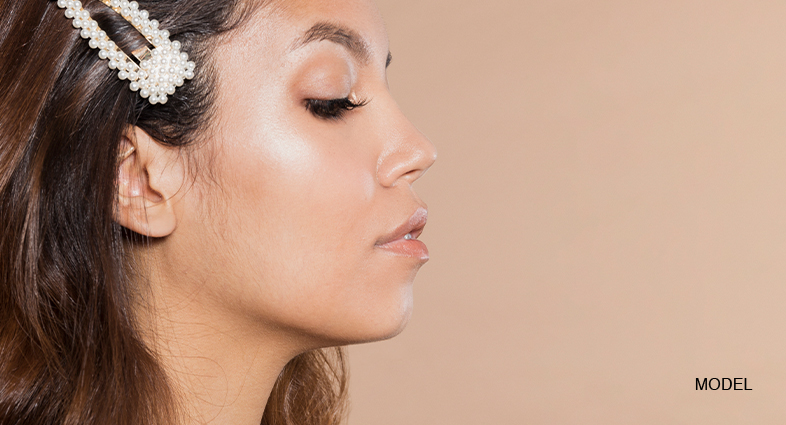


 The key to attractive facial features lies in how the various facial elements are balanced. If the eyes are too close together or the chin is too sharp, it can throw off what might otherwise be a balanced, attractive face. Nowhere is this more evident than with the shape and size of the nose. A perfectly balanced nose should take up one-third of the face, both vertically and horizontally.
Furthermore, the ideal nose’s shape and size may also vary, depending upon gender and size. For example, a short nose with a rotated tip (pixie nose or pug nose) may look fine on a five-foot-tall woman but would look out of place on a six-foot-tall man. Dr. Marin can reshape such a nose to make it better fit the surrounding facial features and the patient’s overall build.
What Can Cause an Upturned Nasal Tip?
Genetics and an unsuccessful prior rhinoplasty (nose job) are the two most common causes for a shortened nose with an upturned nasal tip. Such a nose can result in difficulty breathing. In extreme cases, which usually involve palate problems, it may indicate specific rare chromosomal abnormalities. Suppose a patient has functional difficulty resulting from the upturned nose, such as difficulty breathing or excessive snoring. In that case, insurance may cover the cost of the rhinoplasty to correct the problem.
Correcting for an Upturned Nasal Tip
There are several ways to correct an upturned nasal tip using cartilage grafts from either the septum (the middle section of the cartilage that divides the nostrils) or rib cartilage. In most cases, ear cartilage is not sturdy enough to support the new nasal tip.
- Caudal septal extension graft: This technique adds an extension to the existing nasal tip to lengthen the nose. It is sutured to the existing nasal septum structure, allowing for a very sturdy framework and the new nasal tip to be rotated back downward.
- Extended spreader graft: This graft works similarly to the standard graft used to widen a narrow nose. The difference is that it is extended past the nasal tip’s length so that it can be shaped into the desired position.
When Is the Best Time to Correct for a Previous Rhinoplasty?
The most common reason for needing a revision rhinoplasty to correct an upturned nose is when the previous surgery removed too much cartilage. As a result, the healing nose will contract too much, pushing the nasal tip upward. If a prior rhinoplasty requires correction, the original scar tissue must be released to move the nasal tip into the more desired position. The best time to do this is after the initial swelling has gone down, but before the nasal skin is too tight to be stretched over the new nasal framework.
Rhinoplasty is all about making the nose best fit the patient’s other facial features, as well as their overall build. Dr. Marin will work with patients to provide them with the best possible look to their nose and their overall facial appearance. Contact Marin Aesthetics today to schedule a rhinoplasty consultation.