

 The possibility of excessive breast scarring is perhaps the biggest concern of patients who have opted to undergo a breast augmentation procedure. Since they have chosen to undergo this procedure to improve the chest’s appearance, any unsightly scars on the breasts will counter these efforts. I recommend that patients who are worried about scarring on the breasts themselves consider the transaxillary approach for inserting breast implants.
What Is the Transaxillary Breast Augmentation Technique?
The transaxillary approach uses a small incision made in the natural fold of the armpit. A pathway to the breast is created, and a pocket is formed for the breast implant. The implant is then guided through the incision and placed into the pocket. Implants can be placed either in front of (subglandular) or behind (subpectoral) the pectoral (chest) muscles. The procedure is done either with an endoscope’s aid (a small camera mounted on a surgical instrument) to see where the implant should be placed, or “blind” without an endoscope. The transaxillary approach can insert either silicone or saline implants. If the implants are saline, they are inserted as an empty shell and then filled with saline once correctly positioned. Silicone implants can be inserted with this approach, but there are limitations as to the size of silicone implants that can be placed via this approach.
Pros of the Transaxillary Approach
Perhaps the most significant advantage of the transaxillary approach is that the incision scar is relatively small (1-2 cm) and hidden in the natural crease of the armpit.
A transaxillary approach also does not come in contact with the milk ducts, which means that patients will be able to breastfeed following the procedure successfully. It also will not affect nipple sensation, as none of the nerves are severed.
Cons of the Transaxillary Approach
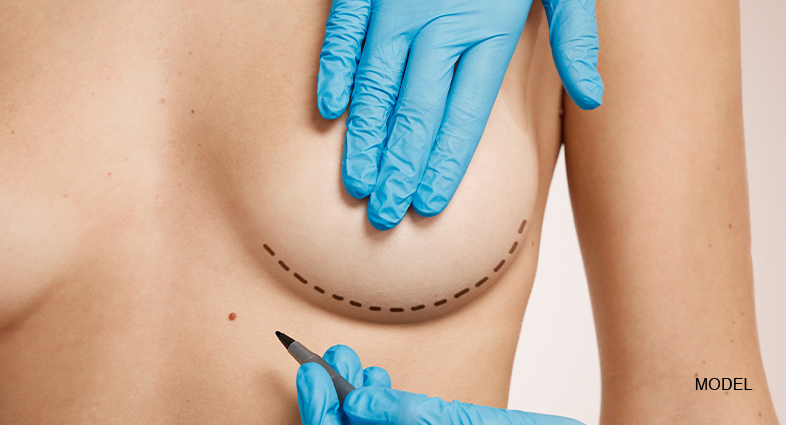
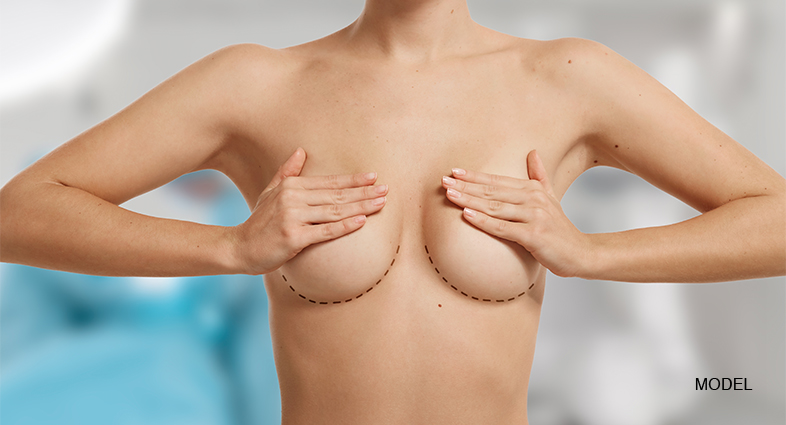
Perhaps the most significant disadvantage of the transaxillary approach is that if a revision surgical procedure is needed, the transaxillary scar can’t be re-used. Instead, the incision must be made in the inframammary crease (the point at which the lower portion of the breast meets the chest wall). This will result in additional scarring.
Another con of the transaxillary approach is that it is not recommended for certain implants. Although the transaxillary approach can place silicone implants, it is only feasible for smaller implants. Patients who select larger silicone implants are advised to opt for an inframammary crease approach.
Also, the transaxillary approach results in less visibility when creating the implant pocket. Although a skilled plastic surgeon can still produce beautiful and natural-looking results even with this limited visibility, it is still considered a drawback.
Patients who have concerns about which approach is best suited for their individual needs can discuss their plastic surgeon options.